2018/12/30

BBC radio host forced to apologise after an "insulting" tweet suggested Welsh was akin to a foreign language.

Jeremy Vine criticised over attitude to Welsh language. The BBC radio host Jeremy Vine has been criticised after he appeared to suggest people in Wales should speak English instead of their mother tongue.

Earlier this year he interviewed a man from Pontypridd in South Wales who'd declared about Welsh: "I don't want to speak it, it's a horrible language.

"If you go into any pub in west Wales, or North Wales, they're all there speaking English. As soon as they hear my accent, they start changing into Welsh, so we can't understand them."

After the aftermath had seemingly died down, Radio 2 produced its review of the year, which tossed the issue back into the limelight.

In an attempt to douse the flames, Vine shared an article by BBC colleague Owen Williams in an attempt to "provide context".


But it had the opposite effect, with proud Welshmen accusing the presenter of bigotry, which he denied.

A further furore then erupted when Jeremy Vine's official Twitter feed responded to a message, which compared speaking the Welsh language in Wales to using French in France, by asking: "Is France in the UK?"

The tweet has since been deleted.

Replying to a Twitter user who suggested the presenter apologised or explained the tweet, Vine insisted : "My tweet was misconstrued! I was pointing out that the listener on my show who complained about people not speaking English to him in Wales was not quite the same as a Brit in Paris who complains no-one speaks English there. Didn't mean to offend."

Plaid Cymru Welsh Assembly member Sian Gwenllian, whose Arfon constituency is in the Welsh-speaking heartland of north west Wales, invited Vine to visit the area "so that you can understand what it means to live in a community where Welsh is the day-to-day medium of communication".

"Perhaps then you will see why your recent remark about the Welsh language is profoundly insulting to our identity, culture and way of life."

Source
Read more »

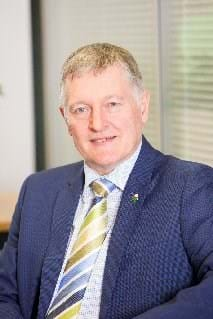
New Chairman for National Centre for Learning Welsh Advisory Board


The National Centre for Learning Welsh is pleased to announce Rheon Tomos has been appointed the new Chairman of the Centre’s Advisory Board. Rheon Tomos will succeed Dr Haydn E Edwards who has chaired the Board for the past three years.
 

Rheon Tomos is a Chartered Accountant and has worked in both public finance and policy. During his career, he has specialised in education and has been a member of S4C’s Board, Estyn and Cymwysterau Cymru: Qualifications Wales. He is a current member of the Audit Committees of Amgueddfa Cymru/National Museum Wales and the Welsh Language Commissioner. He is also a Trustee and Vice Chairman of Urdd Gobaith Cymru.

Rheon is a native of Gwynedd and graduated from Bangor University. During the 1980s he lived in Carmarthen, but he and his family are now settled in Cardiff.

Rheon and other members of the Advisory Board will work to ensure the Centre achieves its strategic objectives by transforming the provision for Welsh learners as well as agreeing on national targets for the Learn Welsh sector.

Rheon Tomos said: “I’m looking forward to taking on this new role in the New Year. It will be a privilege to build upon the Centre’s current work and support adults to learn Welsh in order to contribute to Welsh Government’s aim of creating a million Welsh speakers by 2050.”

The Centre is also seeking new members to join the Board as some current members are coming to the end of their terms. The Centre welcomes applications from individuals who are eager to promote teaching Welsh to adults or who have learnt Welsh themselves.

The successful candidates will be required to attend three meetings a year and the closing date for applications is Friday, 11 January 2019. Further information can be found here.

Efa Gruffudd Jones, Chief Executive of the National Centre for Learning Welsh added:

‘‘We look forward to welcoming Rheon to the Centre, as well as other new Board members who will support him in his work. Rheon has a strong understanding of the sector as well as extensive experience of chairing meetings, and I’m certain the Centre will be in capable hands as we start the next phase of our work.

“I would also like to thank Dr Haydn E Edwards for his work as the Advisory Board’s first Chairman. Haydn gave strong leadership and excellent advice in guiding the Centre’s first years.”

Read more »

2018/12/29

East Belfast may get Irish-medium school

There are plans to open the first Irish-medium school in east Belfast. A number of organisations are behind the proposal, including the NI Council for Integrated Education (NICIE) and Comhairle na Gaelscolaíochta (CnaG).
The proposal would involve the creation of a new Irish language nursery and primary school.
As the project is in its early stages, however, no prospective site has yet been identified.
Linda Ervine, from the Irish-language organisation Turas, is also involved in the plans.
Turas has been running Irish classes for adults in the Skainos centre in east Belfast for a number of years.
Ms Ervine said there was a demand from some parents in the area for Irish-medium education.
"We know there is a demand and we feel there is a gap in east Belfast at the minute," she said.
"We've already got parents who have registered their babies and said 'we want our children to attend an Irish medium school'."
There are already nine Irish-medium primary schools in Belfast but only one, Scoil an Droichid, in the south and east of the city.
It is in the lower Ormeau area but there are plans to move to the former Ulidia primary school site close to Ormeau Park.
 Scoil an Droichid is the sole Irish-medium school in the south and east of Belfast

Read more »

2018/12/28

Bun-sgoil Ghàidhlig Phort Rìgh, New Scottish Gaelic School

Deputy First Minister, John Swinney MSP officially opened Bun-sgoil Ghàidhlig Phort Rìgh in September. Support given to Highland Council by the Scottish Government was key to making it happen but without the persistence of parents over the past ten years it is unlikely that there would have been a school. We are looking forward to seeing the school flourish and well done to all concerned.

Read more »

2018/12/27

€2.7 million funding announced for An tAcadamh, NUI Galway’s Irish Language School

€2.7 million in funding has been allocated to NUI Galway’s Irish Language Academy, An tAcadamh.
The allocation will provide €900,000 per year for three academic years, commencing with the 2018/19 academic year.
Speaking from the Acadamh in An Cheathrú Rua, Minister Sean Kyne, said he was delighted to announce the funding of 2.7 million. 
“The funding is guided by a service level agreement between my department, the Department of Culture, Heritage and the Gaeltacht and the Acadamh na hOllscolaíochta Gaeilge which was established in 2004. 
“The Acadamh operates from NUIG’s main campus in Galway and three centres in the Gaeltacht – An Cheathrú Rua and Carna in Connemara and Gaoth Dobhair in Donegal.
“It plays a vital role in developing and provided higher education through Irish including the provision of courses and classes for Irish language learners of all levels and of all ages, said Minister Kyne.
The Acadamh is a centre of learning for more than 2,000 people each year including students undertaking third level courses through Irish, students training to become primary and secondary teachers, students studying for the Diploma sa Ghaeilge as well as international students. 
It also conducts research on ways to promote and preserve the Irish language, in particular in Gaeltacht communities, and also plays a role in the language planning process. 
Minister Kyne continued: “The contribution of the Acadamh to the local economy is significant with direct employment for approximately 80 people, including 35 in Connemara, as well as the boost that students bring, especially those on residential courses. 
“This funding from my department, which fulfils objectives of the Government’s Action Plan for the Irish Language, will help the Acadamh continue its work which is so vital to An Ghaeilge and the Gaeltacht.

Read more »

2018/12/25

Cymdeithas yr Iaith Gymraeg tells Starbucks to ‘Respect the Welsh language’


Members of the Pantycelyn group of Cymdeithas yr Iaith gathered outside Aberystwyth Starbucks on Friday (April 29) calling on the company to respect the Welsh language.

The action followed an allegation by star soprano Gwawr Edwards that she overheard a member of Starbucks staff told a customer to ‘Speak English or get out’.

The company now denies the incident happened at all.


Manon Elin, chair of Cymdeithas’ language rights group who is also a member of the Pantycelyn group said: “It strikes us as odd that someone, with a high public profile, would tweet about something like this if there is no truth to it.

“But the fact remains that the company, like every other company, should ensure that all staff are aware of the importance of offering a service in Welsh, and that the Welsh language has official status.

“It is the staff’s responsibility to learn Welsh to serve customers, not expect customers to use English. As there was an allegation that an individual’s freedom to speak Welsh was interfered with, which is illegal, we have asked the Welsh Language Commissioner to investigate.”

Councillor Mark Strong who joined the group at Starbucks on Friday told the Herald that they got a far from friendly reaction when they asked politely, in Welsh, to speak to the manager.

Elfed Jones, Chair of the Pantycelyn group of Cymdeithas yr Iaith said: “Cymdeithas has sent a letter to the company’s national HQ about the situation but we felt that something should be done locally too. We encourage everyone to go to local cafes.

“But given that not everyone will want to do so, all staff at Starbucks should have language awareness training, and be provided with Welsh lessons.”

Read more »

2018/12/24

New £7.4million home for Welsh primary school planned for Barry

Vale of Glamorgan Council's cabinet approved plans on December 17 to consult on moving Ysgol St Baruc to a new building in Barry Waterfront. It would mean the capacity of the Welsh medium school would expand from 210 places to 420 places, and it would also have 96 nursery places.

The public consultation will run from January 8 to February 22. Councillor John Thomas, leader of the council, said in a statement: “Welsh medium education is increasing in popularity and has seen significant growth since Ysgol Gymraeg Bro Morgannwg opened in 2000. The council needs to plan its school provision in line with this.

“A new Welsh medium primary school on the Waterfront will remove the need for many pupils and parents to travel across the town to school each day. Alongside a remodelling of school catchment areas elsewhere in Barry this will lead to an increase in spaces at other schools.”

The current Ysgol St Baruc operates from a Victorian building and a two classroom block built in the 1980s. The council says there is no room for the school to expand at its current site, where the classrooms are too small for the number of pupils and the school currently uses the dining facilities at the adjacent High Street Primary School as there are no catering facilities on site.

Establishing a new primary school on the Waterfront is likely to lead to changes to the catchment areas of High Street, Holton and Ysgol St Baruc Primary schools.

Read more »

2018/12/23

An Comunn Gàidhealach: John Macleod Memorial Lecture to take place on Thursday 24 January 2019

In his opening address at the 2018 Royal National Mòd in Dunoon, Allan Campbell (President of An Comunn Gàidhealach) remarked upon the passing of the late John Macleod, who was president of An Comunn Gàidhealach for ten years, reiterating the appreciation for everything that John did as president, and for Gaelic in general. He revealed that An Comunn Gàidhealach, organisers of The Mòd, will establish an annual lecture in John’s memory. It is appropriate that the annual lecture is supported by the Department of Celtic and Scottish Studies of the University of Edinburgh. This support will allow the first annual John Macleod Memorial Lecture to take place on Thursday 24 January 2019, in The Project Room, 50 George Square, University of Edinburgh, EH8 9LH. In recognition of John’s enthusiasm and encouragement of young people in the Gaelic community, the lectures will always be delivered by young speakers and it is appropriate that the inaugural address will be delivered by Kate Forbes MSP.
The focus of the address will be on young people and how we address the opportunity to attract them to our cultural heritage. The topic is particularly relevant in the wake of the highly successful 2018 celebration of Scotland’s Year of Young People. Indeed, in his opening address at the 2018 Royal National Mòd Allan Campbell remarked upon the importance of keeping Gaelic cultural heritage alive, highlighting the important contribution that the Royal National Mòd makes and stating that: “The future of Gaelic is dependent on the confidence and opportunities which we provide for the young people who will succeed us.”
Kate Forbes, MSP said: “It is a great honour to be asked to give the inaugural John MacLeod Memorial Lecture, as a young Gael. I had the enormous privilege of working with John Macleod as Convenor of the Cross Party Group on Gaelic. He was a determined campaigner, well-known across the political spectrum. I was delighted to pay tribute to his efforts to secure UNESCO status for Gaelic earlier this year. It seems fitting to start 2018 recalling John Macleod’s character, contributions and concern for Gaelic’s future.
Allan Campbell, President of An Comunn Gàidhealach, said: “We are delighted that Kate Forbes has agreed to deliver the inaugural John Macleod Memorial Lecture. It would be difficult to find a better example of the benefits of bilingual Gaelic education. Kate exudes confidence in Gaelic and is precisely the type of exponent of our language and culture that John wished to see in all our Gaelic communities”
Prof. Rob Dunbar, Department of Celtic and Scottish studies of the University of Edinburgh, said: “We are delighted and, indeed, deeply honoured to host this inaugural John Macleod Memorial Lecture. John was a tireless and principled campaigner for the language and contributed greatly to the Gaelic community both nationally and here in Edinburgh. It will be a pleasure to welcome Kate Forbes back to the university. Her fluency in and strong commitment to Gaelic, and her commitment to public life make her both an excellent role model and a most appropriate inaugural lecturer.”
  • John Macleod, Memorial Lecture
  • Date: 24
  • January 2019
  • Venue: The University of Edinburgh, The Project Room, 50 George Square, Edinburgh, EH8 9LH
  • Time: 19.00 – 21.30 (Address delivered at 19.30)
Translation facilities for non-Gaelic speakers will be available
For media information please contact An Comunn Gàidhealach:
01463 709705

Read more »

2018/12/20

"Support for the Cornish language is growing"

“Support for the Cornish language is growing” says the new Grand Bard of Cornwall. Communique from Gorsedh Kernow – The Celtic spirit of Cornwall – in its 90th anniversary year
“This is one of my first duties as the new Grand Bard of Cornwall,” said Elizabeth Carne, Melennek, as she prepared to present graduation certificates to successful candidates of the Cornish language, Kernewek at Lys Kernow (Cornwall Council Offices) in Truro on Saturday 14th September 2018
The Cornish Language Board, KESVA – set up in 1967 by Gorsedh Kernow and the Federation of Old Cornwall Societies, recently announced an impressive set of results from the 77 candidates who took their exams back in the summer.
“I am so proud to congratulate our successful students, almost 15% up on last year, who are joining the growing number of people learning and taking exams in our precious Cornish language, Kernewek,” said the Grand Bard “and as a Cornish language teacher myself I would like to encourage everyone to think about learning a little Kernewek to use in their everyday lives.”
Taking time out after a hectic few months in the run up to Gorsedh Kernow’s Esedhvos Festival of Cornish Culture, where Mrs Carne was installed as the new Grand Bard, she expressed her enormous gratitude to all those, many of whom are bards of Gorsedh Kernow, working hard to help the language thrive.
“I can hardly believe it myself, but it’s now forty years since I was invited to join the College of Bards for proficiency in the Cornish language and I have never lost my love for it.”
She gave particular mention to fellow bard Keith Syed, Gwyk Los, who was recently awarded a Gorsedh Kernow Awen medal in recognition of 34 years work on a translation of the Bible into Cornish.
“This is not the first time the Bible has been translated into Cornish,” said the Grand Bard, “but access to such large volumes in print is not always easy and we are delighted to announce that this new translation is available through newly launched downloadable apps for tablets, smartphones, pc and laptop.”
While warmly welcoming this move towards greater access to the Cornish language the Grand Bard once again drew attention to the lack of support from the British government for such an important part of Cornish culture.
“The Council of Europe has long since recognised the Cornish people and the importance of our cultural assets, such as Kernewek, under the Framework Convention for the Protection of National Minorities ” said Elizabeth Carne, “and once again we call on HM Government to honour their commitment to the Cornish people and reinstate funding to the Cornish language.”

Read more »

2018/12/19

Irish Language GCSE entries falling 30 % in Northern Ireland

The number of pupils taking Irish GCSE exams is falling at a time when the sector is growing rapidly. Gael Linn, the national organisation that works to foster and promote Irish, said languages need to become an essential part of the curriculum again.

The group carried out an analysis of the numbers choosing Irish at GCSE from 2007 to 2018. The findings were "a cause of deep concern", it said. In 2007, there were 2,710 pupils taking the subject compared to 1,814 this year - a drop of more than 30 per cent.
Separate research predicts an almost 100 per cent rise over a 15-year period in children being educated at Irish-medium schools. In 2006/07, there were 3,660 children at Irish-medium schools. This increased to 5,873 by 2016 and it is predicted that by 2021, there will be 7,220 children receiving education through the medium of Irish - a rise of 97 per cent from 2006.

"There are two subjects available in Irish at GCSE; GCSE Irish and GCSE Gaeilge which is usually taken by Irish-medium pupils of which there are approximately 150 per annum. The fall in the numbers choosing GCSE Irish is up to 30 per cent since a decision was taken to make languages optional in the national curriculum and at GCSE level across the UK in 2004. Gael Linn raised this issue when it put together a delegation to lobby members of parliament at Westminster late last month."

The group further noted concerns raised by the chief inspector in which she reported a decline in the study of modern languages. There has been no replacement for the Primary Languages Programme which ended in 2015. It helped 413 primary schools to introduce Irish, Polish or Spanish at Key Stage 1.Noelle Buick also reported on falling numbers taking languages at GCSE and A-level despite the quality of teaching them being as good or better than other subjects inspected.

"The chief inspector refers to the Northern Ireland Languages Strategy which has not yet been introduced. This strategy has been on the shelf since 2012. Gael Linn has concerns that this languages strategy will be out of date before it is even introduced," Mr Ó Ciaráin said. "The number of pupils in Irish immersion education has increased again with 6,184 pupils now attending Irish-medium schools in Northern Ireland.

Read more »